Several months ago, I was invited to take part in a TESOL Academy on ESP in São Paolo, Brazil in September, 2013. I was asked to take part in a plenary discussion on the nature of ESP and run 2 x 4-hour workshops on an aspect of business English.
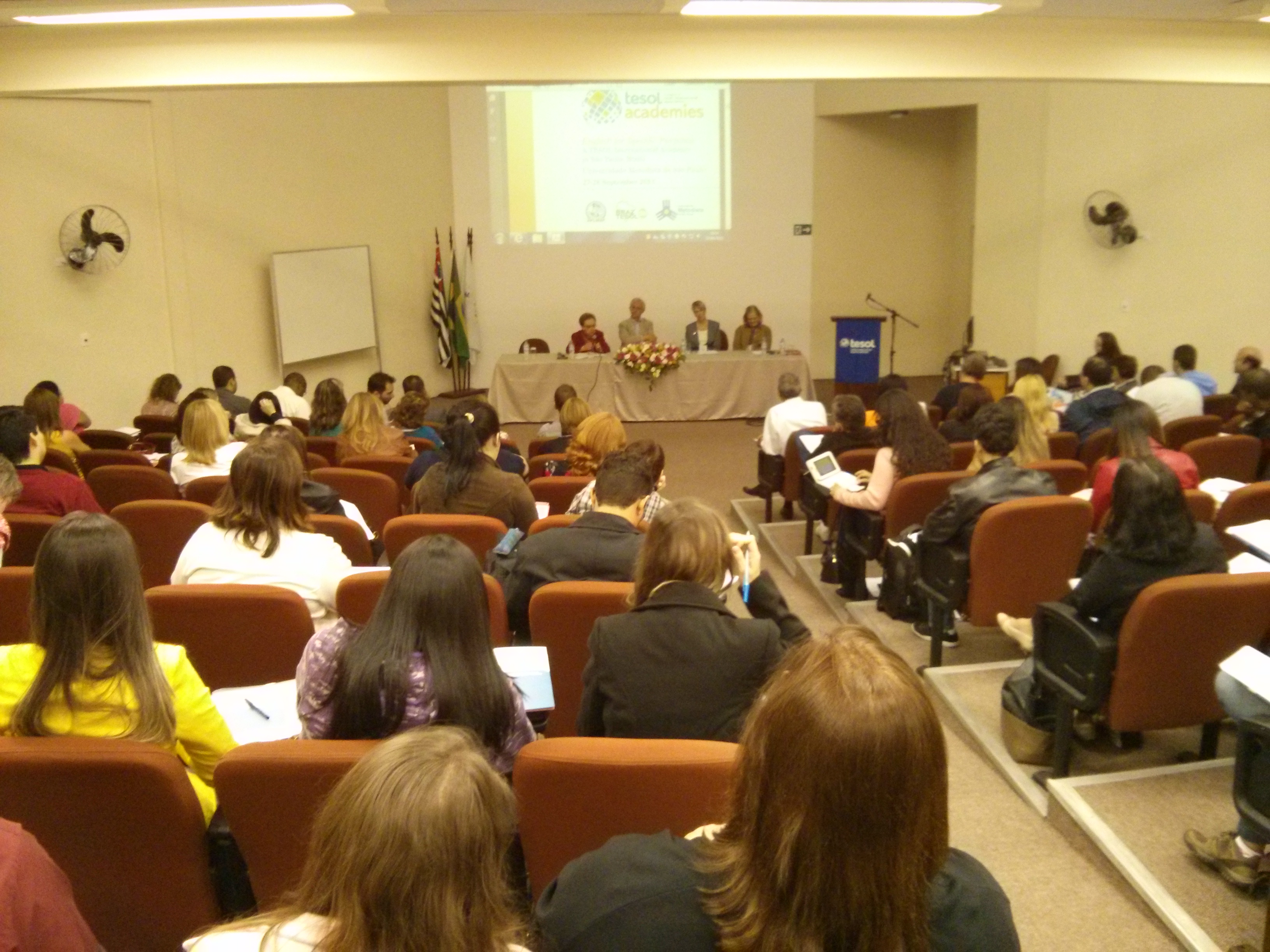
Opening Plenary
I happily accepted this invitation and decided for my workshop to focus on a component of an academic business English course that I have been involved in for the last few years.
The section I chose to use in the workshop is part of a module on a pre-master’s programme at Hertfordshire Business School (HBS), UK. The programme is intended for a range of students who – for various reasons – cannot get direct entry to a master’s programme at HBS. It is a fifteen-week programme, involving 12 weeks of content teaching, divided into 4 modules. Each module lasts 6 weeks and the module that I concentrated on was “Managing Accounting Information”. The assessment of that module was in two parts, three weeks each, a written part and a seminar discussion. I dealt with the written component in the workshop.
The students’ task in the written component was:
Using the accounts for Marks and Spencer plc and other information researched by you, write a report recommending whether or not to invest in Marks and Spencer plc.
Your report should be 1600 words (excluding appendices and executive summary), with a maximum of 2000 words.
I started the workshop by asking the participants – mostly Brazilian teachers – to think about how they would approach this task as students. I asked them to think about what they knew, what they would need to know, what they would need to learn and what they would need to be able to do in order to manage this task.
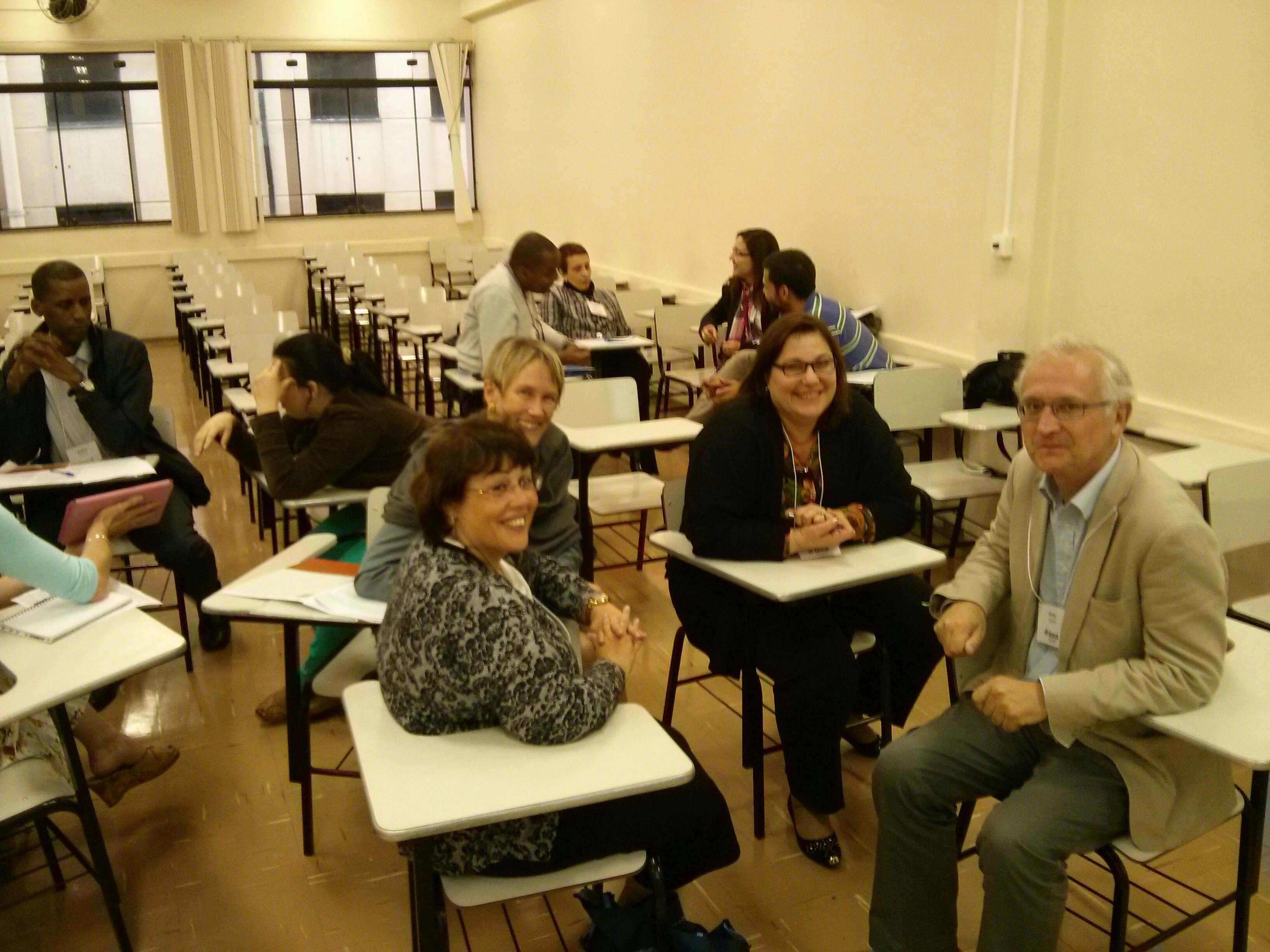
My Workshop
They spent about 30 minutes discussing this. I then spent the next hour, answering their questions about the context, the students, the academic content of the course, the kinds of reading materials the students would be expected to read – mainly the annual report of the company and the accounting textbook – and the vocabulary and grammar required for this. I ended the first half of the workshop by asking the participants to consider what they themselves needed in order to plan a course. Luckily, they said that they needed more information about how such a report should be organised, as that is what I had planned for the second half.
I started the second half of the workshop by introducing the group to Nesi & Gardner’s (2012) work on Genres across the Disciplines. Of particular relevance were the five Primary Purposes of academic writing introduced in chapter 2. These are:
- Demonstrating Knowledge and Understanding
- Developing Powers of Independent Reasoning
- Building Research Skills
- Preparing for Professional Practice
- Writing for Oneself and Others
After looking at various definitions of these primary purposes, taken from Genres across the Disciplines and information on the British Council Learn English Website based on this book, we agreed that this task was an example of Preparing for Professional Practice.
The next stage was to think about the 13 Genre Families identified in Genres across Disciplines, and to choose which Genre Family best represented this assignment task.
Nesi & Gardner (2012, p. 36) divide the Primary Purposes up as follows:
| Primary Purpose | Genre Family |
| 1. Demonstrating Knowledge and Understanding. | Explanations Exercises |
| 2. Building Research Skills. | Literature Surveys Methodology Recounts Research Reports |
| 3. Developing Powers of Independent Reasoning. | Essays Critiques |
| 4. Writing for Oneself and Others. | Event Recounts Public Engagement |
| 5. Preparing for Professional Practice. | Case Studies Design Specifications Problem Questions Proposals |
And again, after looking at various definitions of these Genre Families, taken from Genres across the Disciplines and information on the British Council Learn English Website, we agreed that this task was a good example of a Case Study.
Based on their research, Nesi & Gardner (2012) give the following typical structure for a Case Study:
- Introduction
– Providing some background to the case
- Presentation and investigation of the case
– usually looking at multiple aspects, and applying methods of analysis from your discipline
- Recommendation(s)
– for future action
We finished the workshop by using this structure to help us to provide a more detailed template from which the students could work. Ian Bruce’s (2008) distinction between social and cognitive genres proved useful to help us give useful information about the structure of the stages. Cognitive genres thought useful by the workshop participants were: narratives, descriptions, descriptions of change, comparing and contrasting, explaining – giving reasons & justifying, evaluating, arguing a point of view and recommending. As well as this, time needed to be spent on referencing – paraphrase, summary and synthesis.
Finally we spent some time looking at the linguistic realisations of these cognitive genres.
At the beginning of the workshop, many of the participants felt that they really did not have the necessary knowledge – neither subject nor linguistic – to work with students faced with this task. However, at the end of the workshop, most of them were confident that it was a task they would be happy to take on.
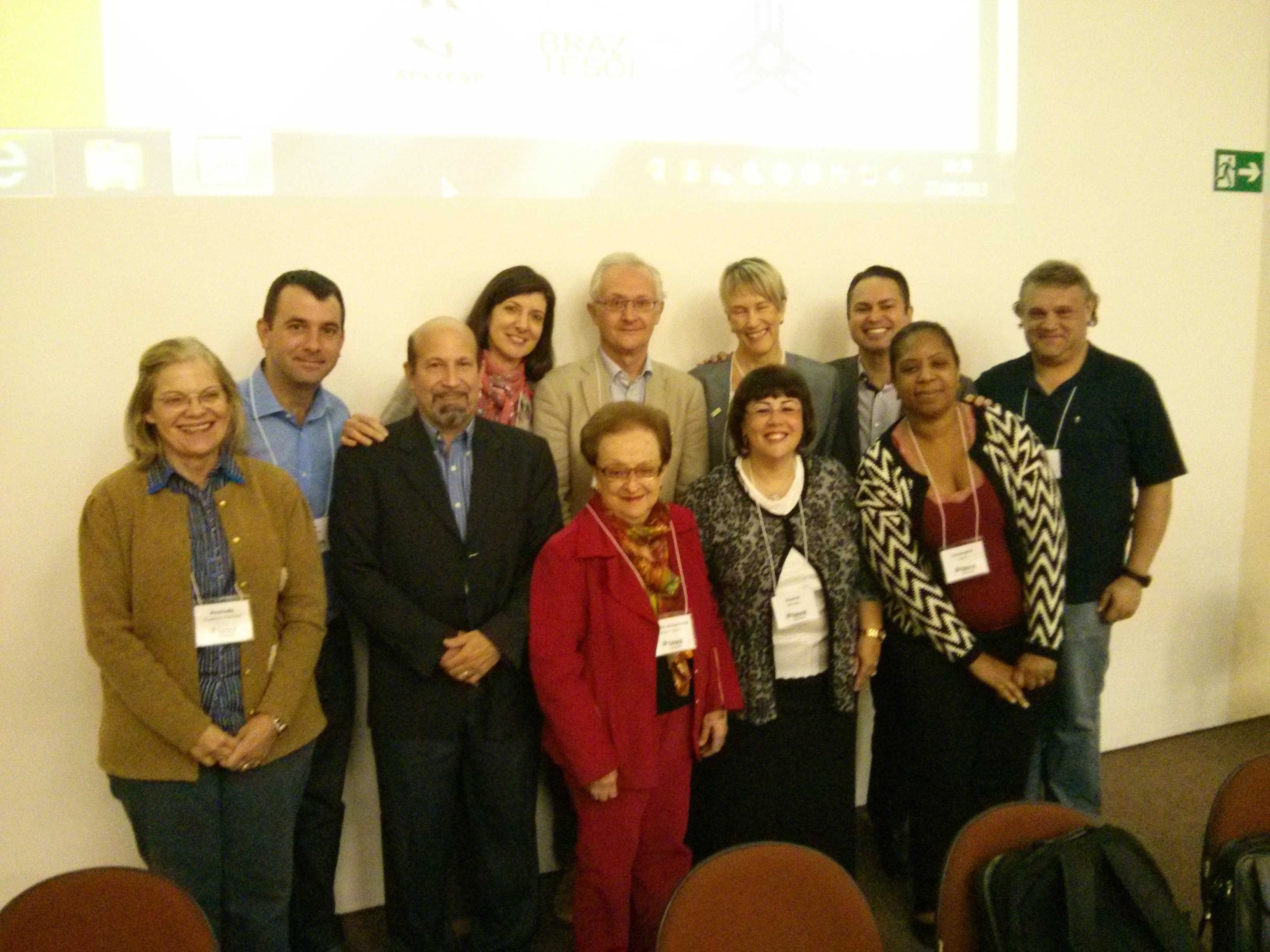
Speakers
Overall, it was an excellent Academy.
Reference
Bruce, I. (2008). Academic writing and genre: A systematic approach. London: Continuum.
Nesi, H. & Gardner, S. (2012). Genres across disciplines: Student writing in higher education. Cambridge: Cambridge University Press.